I. The Origin and Evolution of Sudoku

-
Ancient Wisdom: The origins of sudoku can be traced back to ancient Egypt's hieroglyphs and the Roman Latin squares. These early forms of number puzzles laid the foundation for what we now know as sudoku.
-
The Birth of Modern Sudoku: The 18th-century Swiss mathematician Leonhard Euler's invention of the Latin square is considered the precursor to sudoku. In the 1970s, a similar puzzle appeared in an American magazine, and it was finally named "sudoku" by a Japanese publisher in 1984.
-
A Global Sensation: Sudoku's simple rules and endless challenges quickly made it a worldwide phenomenon, enjoyed by people of all ages. Sudoku competitions and the publication of sudoku books further propelled its popularity.
II. The Basics of Sudoku Play and Rules
-
Simple Yet Engaging Rules: Sudoku's rules are straightforward: fill a 9x9 grid with numbers 1-9, ensuring that each number appears only once in every row, column, and 3x3 subgrid.
-
Gradual Difficulty Levels: Sudoku puzzles come in various difficulty levels, from beginner to expert, with different numbers of pre-filled cells and varying levels of complexity.
-
Multiple Solving Techniques: Mastering techniques like elimination, single candidate, and candidate lines can help players solve sudoku puzzles more efficiently.
III. The Cognitive Benefits of Sudoku for Kids

-
Enhancing Logical Thinking: Sudoku effectively trains children's logical thinking skills, such as analyzing problems, making inferences, and solving challenges.
-
Improving Concentration: Sudoku requires children to focus for extended periods, helping to improve their concentration and ability to block out distractions.
-
Nurturing Mathematical Aptitude: Sudoku introduces children to numbers, basic arithmetic, and spatial reasoning, laying the groundwork for future mathematical learning.
-
Other Benefits: Sudoku also cultivates patience, perseverance, and resilience in children.
IV. The Modern Evolution and Innovation of Sudoku Products
-
Traditional Paper Sudoku: Paper sudoku books and magazines are convenient and portable but lack interactive elements.
-
Electronic Sudoku Games: Sudoku games on various electronic devices, such as smartphones, tablets, and gaming consoles, offer enhanced interactivity but may strain eyesight.
-
Sudoku Apps: Sudoku apps provide a rich user experience with features like progress tracking, but they require electronic devices.
-
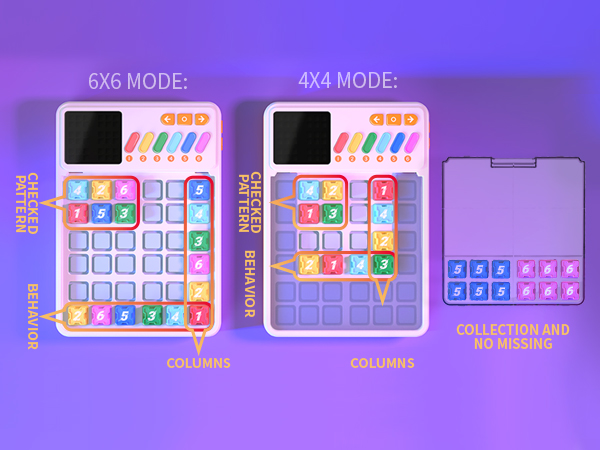
Innovative Sudoku Game Boards: Sudoku game boards combine the puzzle with play, making learning fun for kids. These boards feature colorful grids, number tiles, and real-time feedback lights, making them intuitive and engaging. Correct placements light up green, while errors light up red, providing immediate corrections and boosting confidence. Additionally, sudoku game boards help develop fine motor skills, patience, and perseverance, and they can enhance parent-child interaction.
V. Conclusion
Sudoku, an ancient game brimming with wisdom, has been revitalized by modern technology. Whether through traditional paper sudoku, electronic sudoku games, sudoku apps, or innovative sudoku game boards, this timeless puzzle offers a wealth of brain-boosting experiences. Let us embrace the joy of sudoku and challenge ourselves to grow!